Levoit Mini Humidifier
Compact and quiet, but focused solely on moisture control.
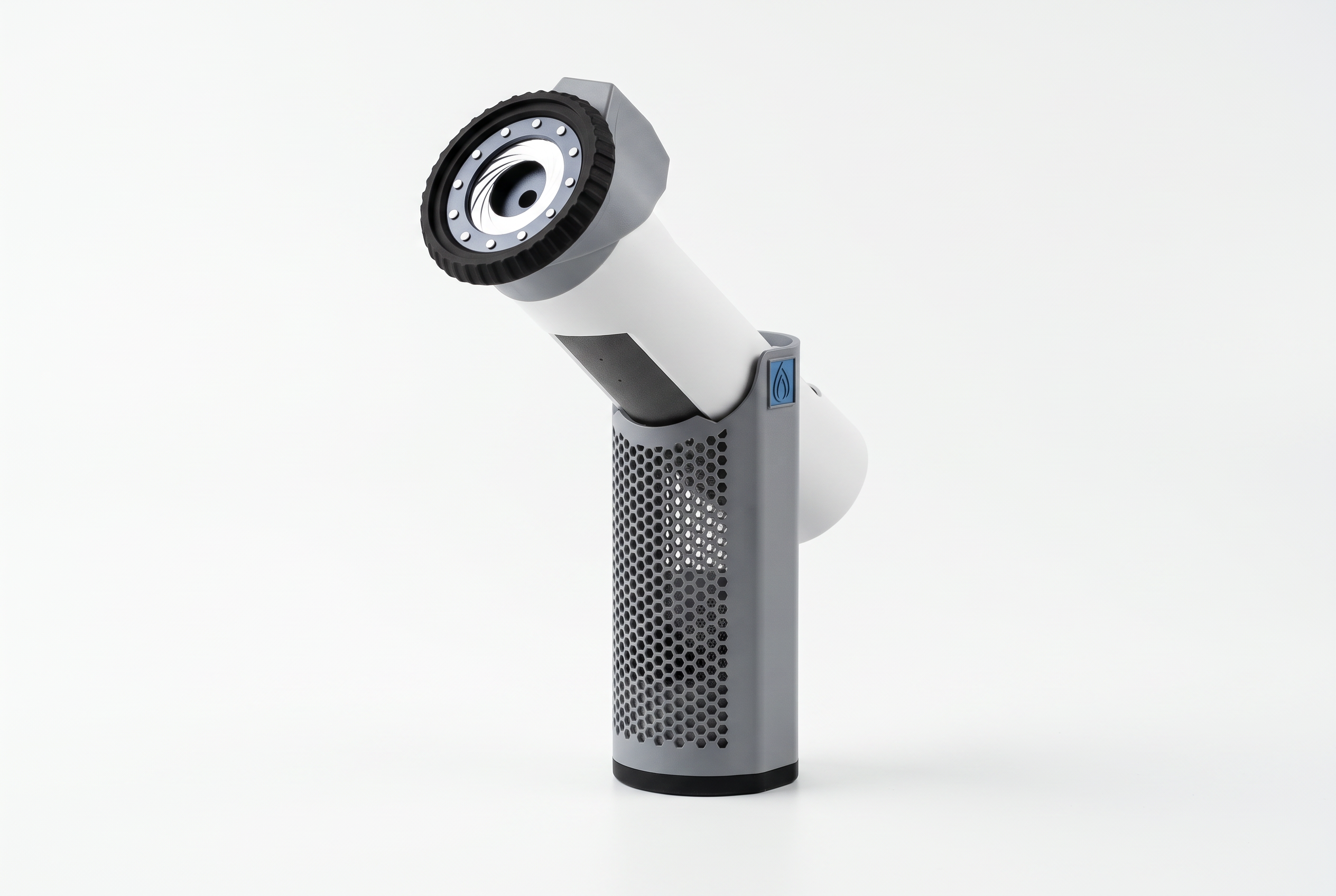
A desktop atomizer that humidifies, then becomes a handheld cleaner.
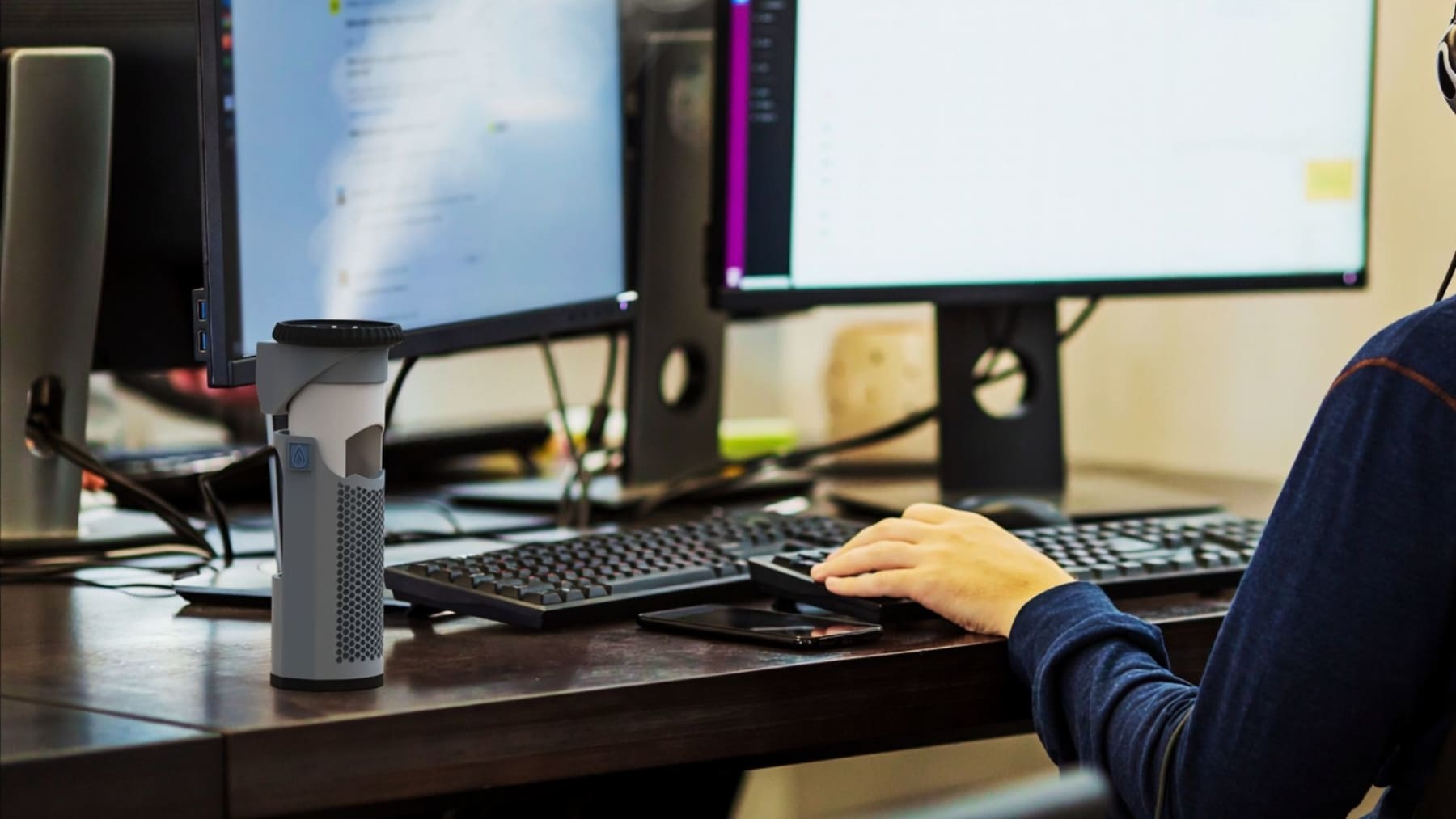
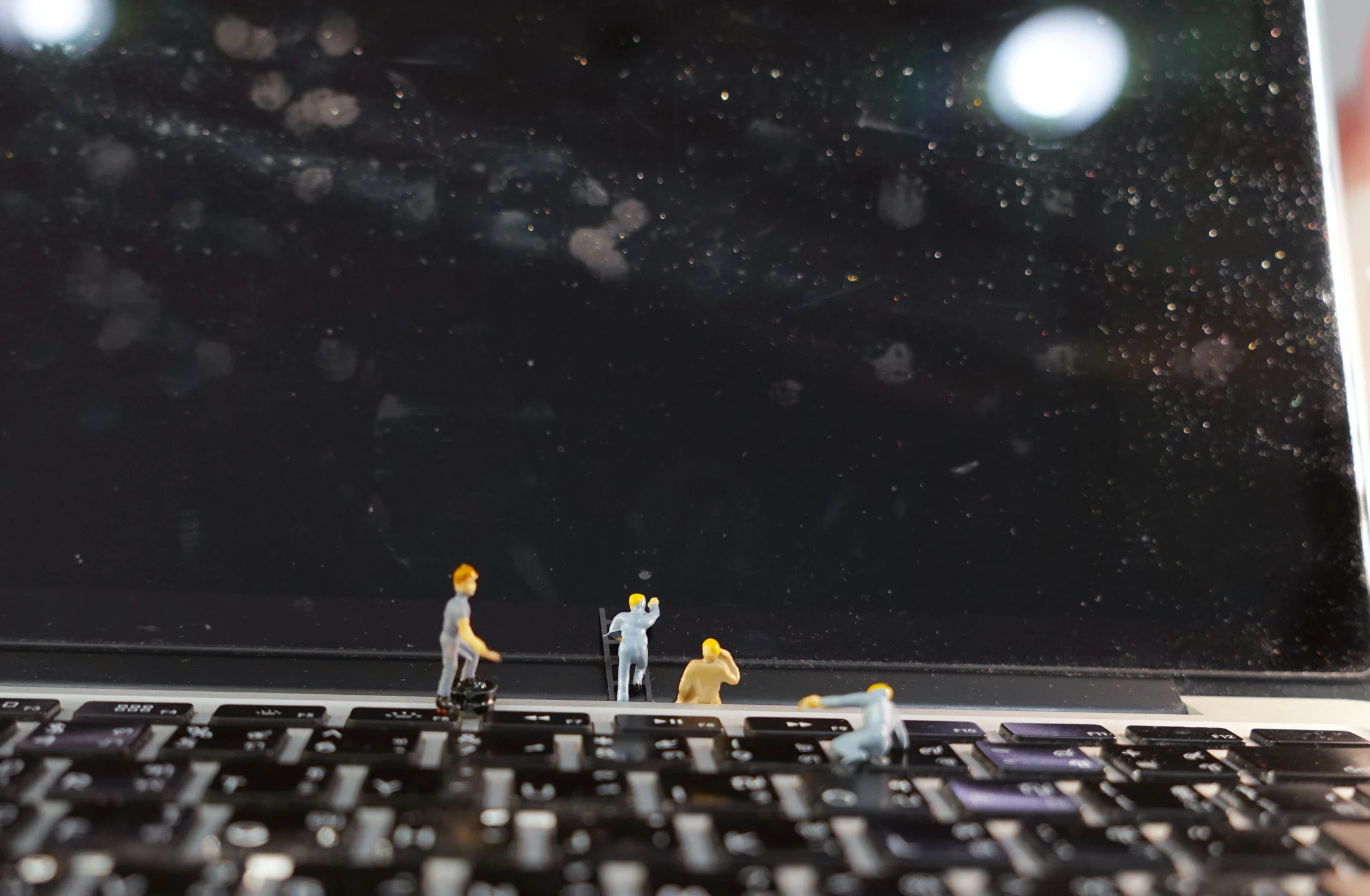
People who work from home care about comfort and how their space looks, but still deal with dry air, dust, and cluttered surfaces. Existing solutions feel clinical, aren’t safe near electronics, or fix only one of those problems.
Research shows that small-scale humidifiers at a desk can improve comfort and eye health during prolonged computer use. Researchers also found that a modest 5% increase in local humidity led to improved tear film stability (Arita & Fukuoka, 2024; Wang et al., 2017).
People in the interviews and survey liked fine mist because it spreads liquid efficiently with less waste. Their frustrations were clogging, uneven or dripping spray, broken nozzles, and mist that is too strong or too weak. What they wanted was ease, control, and efficiency.
The process book doesn’t record how many people responded, so treat these as qualitative findings, not survey statistics.

Early research looked at plant care, air freshening, and cleaning as everyday uses for atomizers. Three personas made those uses specific: a designer with limited desk space, a PC enthusiast worried about electronics, and a hybrid worker who moves between workspaces. They pointed to the same needs: compact size, simple controls, portability, easy refilling, and control over mist direction.
“Clogging, uneven spray, broken nozzles, or mist that’s too strong makes them frustrating to use.”
“The fine mist saves liquid and spreads better, making products last longer.”
“They save time and mess in daily routines, though durability and cleaning could be improved.”
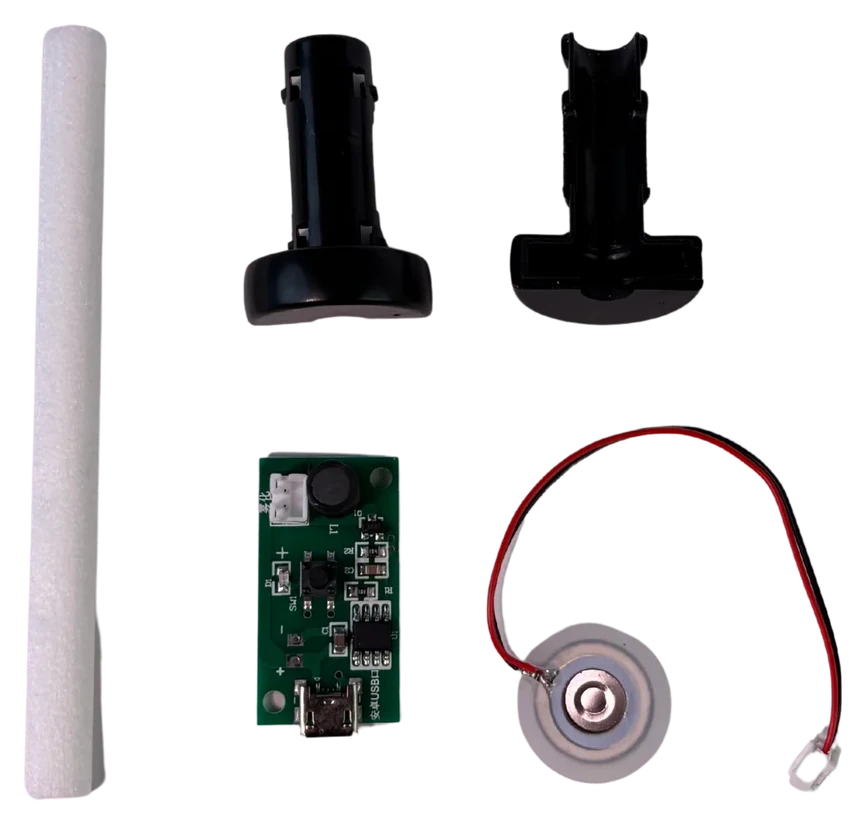
I started by looking at how an ultrasonic atomizer works and where it falls short. A low-voltage component vibrates liquid into a fine mist while a wick draws water up from the reservoir. The limits are clogging, frequent refills, limited coverage, mineral sensitivity, and keeping electronics safe from leaks.
In the market I found gaps around single-purpose devices, difficult cleaning, awkward refills, limited portability and coverage, noise, and products that look out of place at home. Disposable scent pods and cartridges are also a waste problem.
Each existing product solves one part of the problem.
Compact and quiet, but focused solely on moisture control.
Portable, stylish, but lacks any cleaning capability.
Excellent at blowing dust, but noisy and bulky.
Replaces compressed air, but not designed for desks or comfort.
Inspirations for a compact, intentional desk object.
Inspirations for calm, decorative micro-climates.
The research pointed to simple manual control, visible on/off feedback, easy reservoir removal, and a secure seal. The constraints were a 9 × 6 × 6 inch size limit, a stable one-handed lift, easy wick and water replacement, and four to eight hours without refilling.
Those requirements drove the form and mechanism studies.
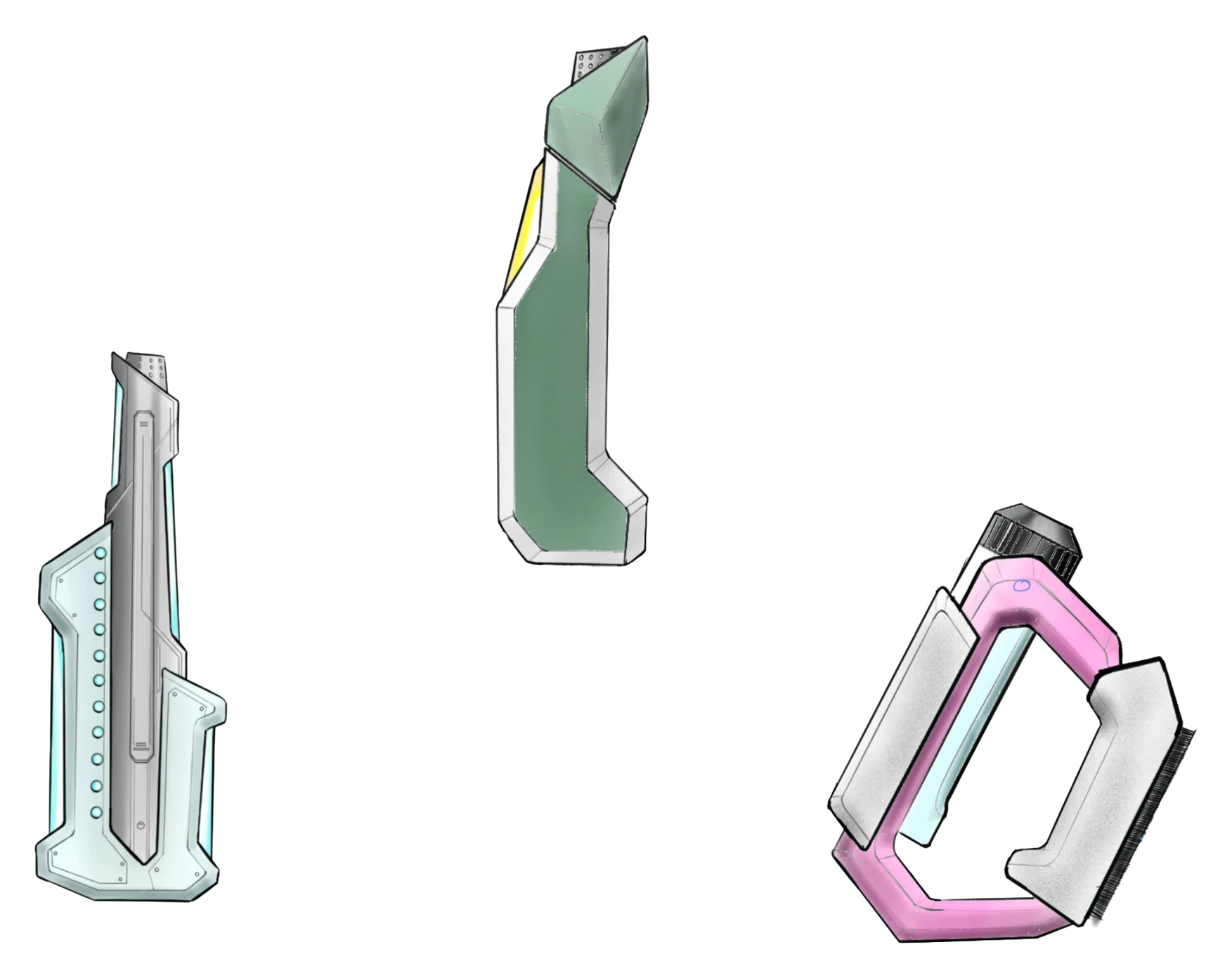
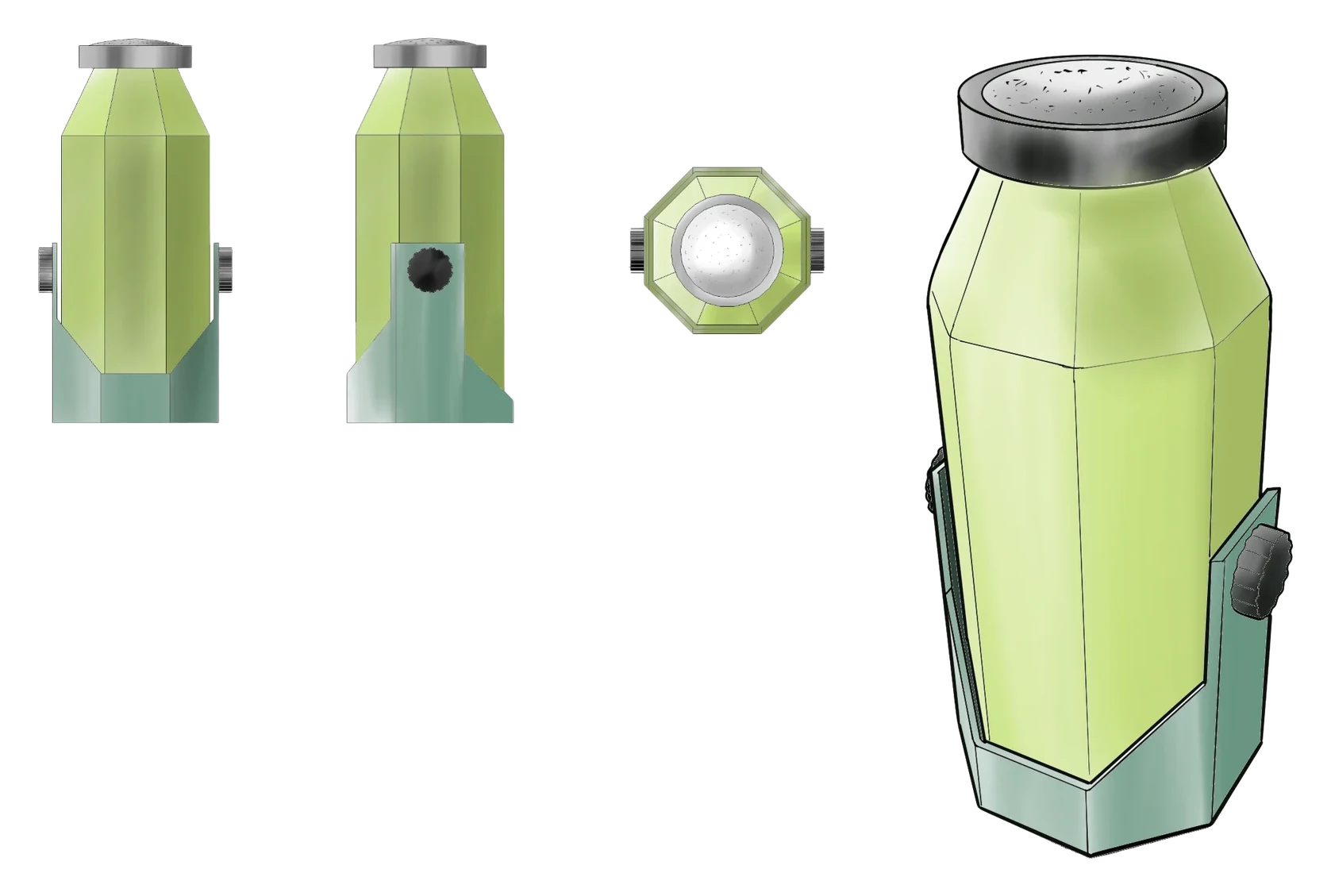
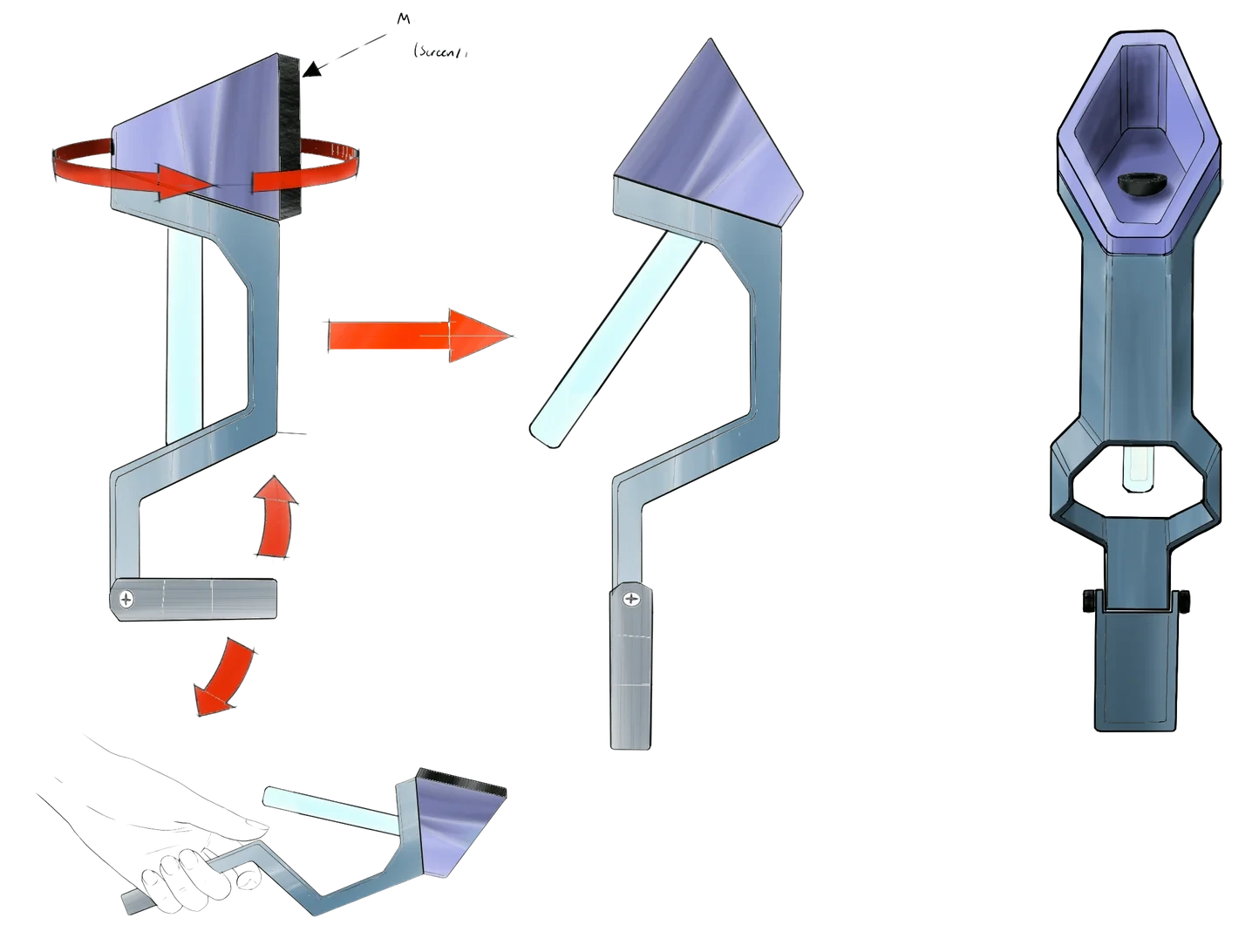
I started from futuristic towers and architecture, with early ideas for a rotating tank, docking, and a swiveling base. I then focused on rotation and added a slide so the body could turn into a handheld cleaner. I wanted it sleek but ergonomic, with the motion itself marking the switch between desk and handheld use.
A foam model checked proportions, ergonomics and size. A 3D-printed model focused on a 45-degree turn, and cardboard models explored the sliding and rotating movement. These are concept models for form and mechanism, not user validation.
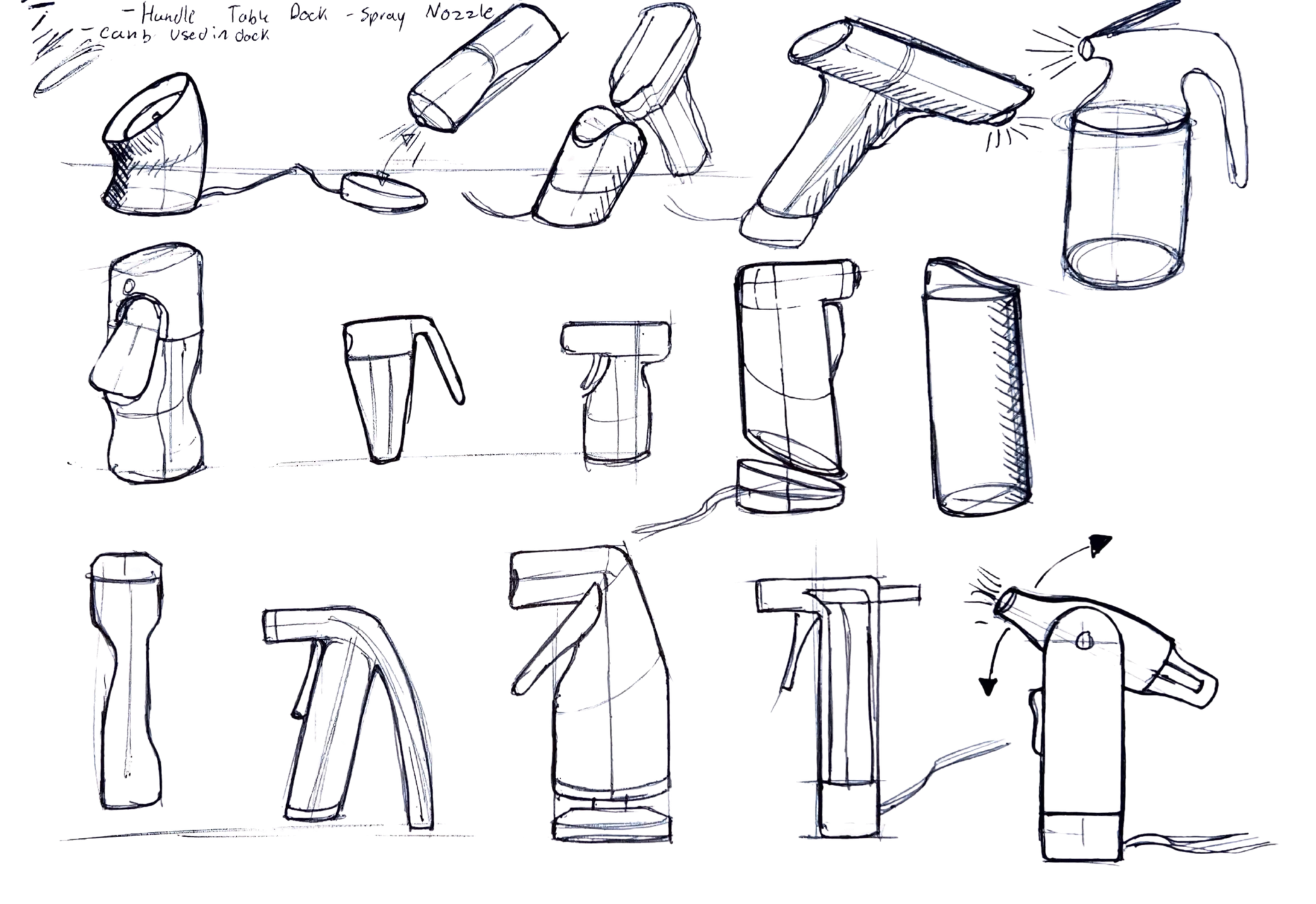
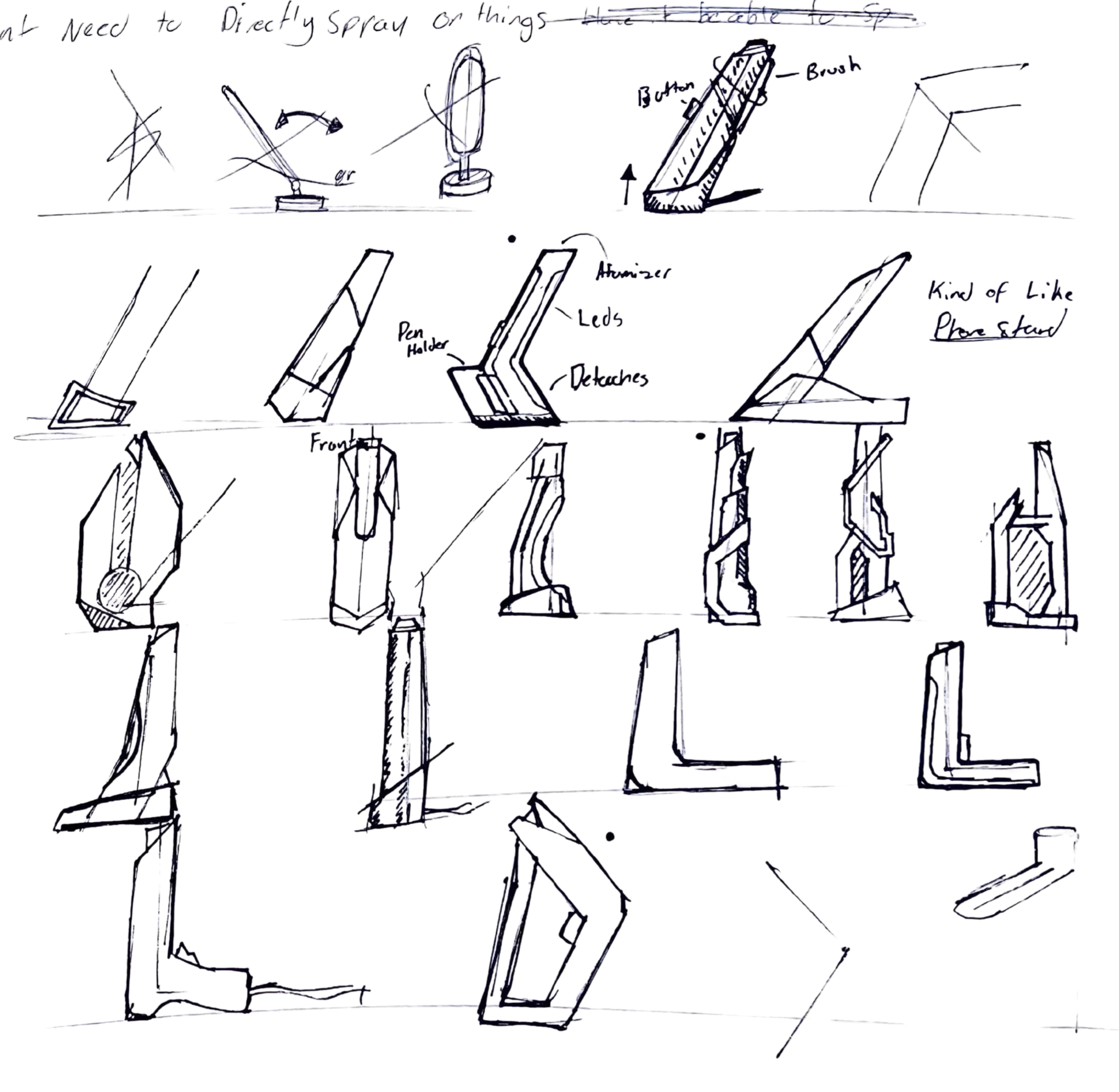
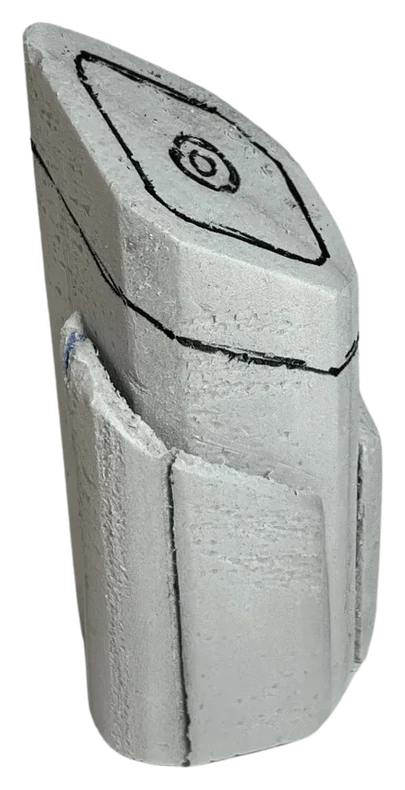
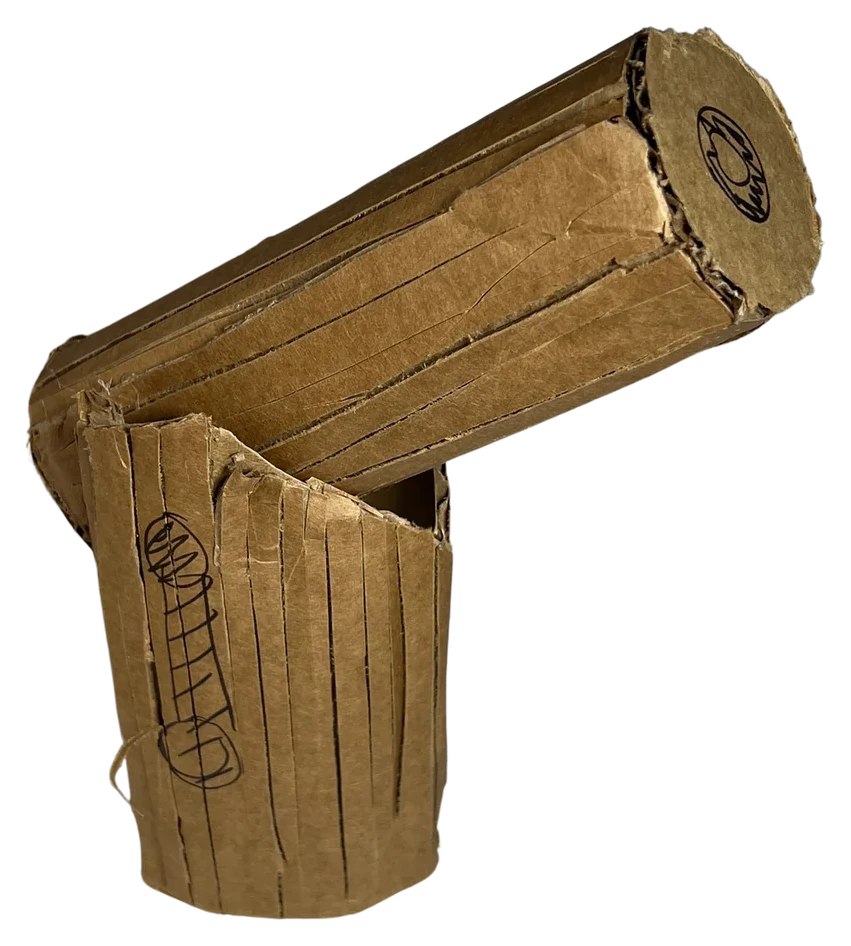
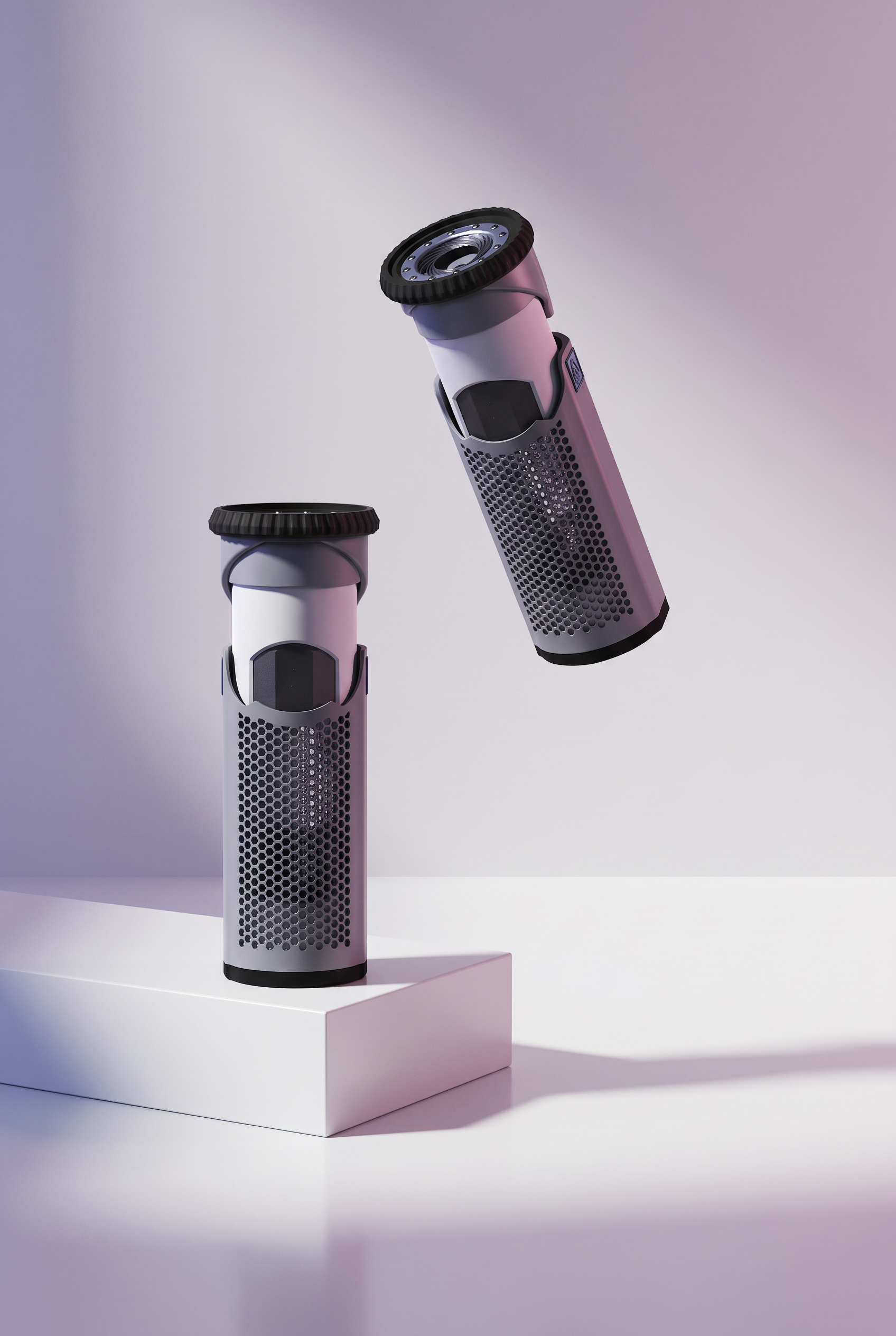
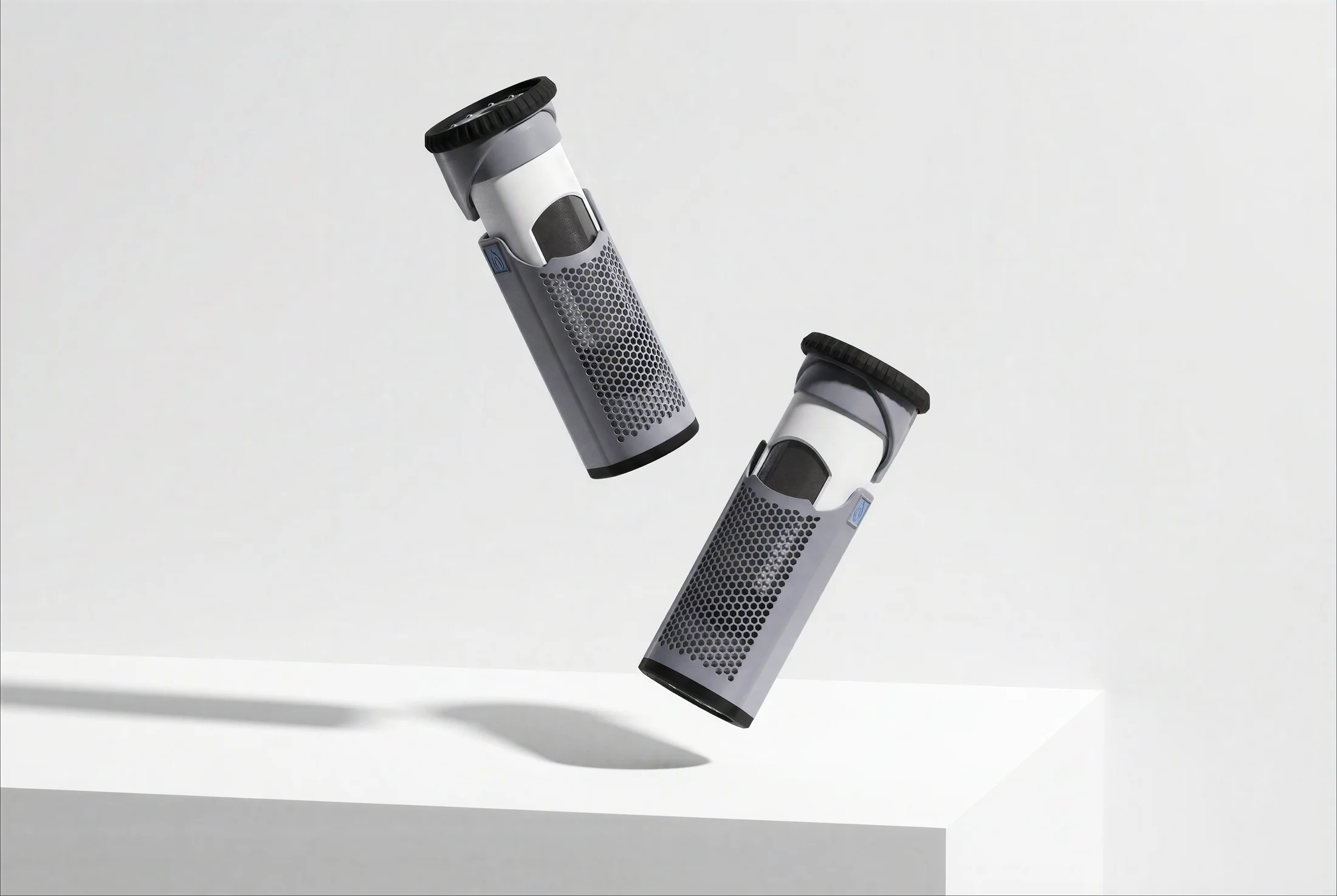
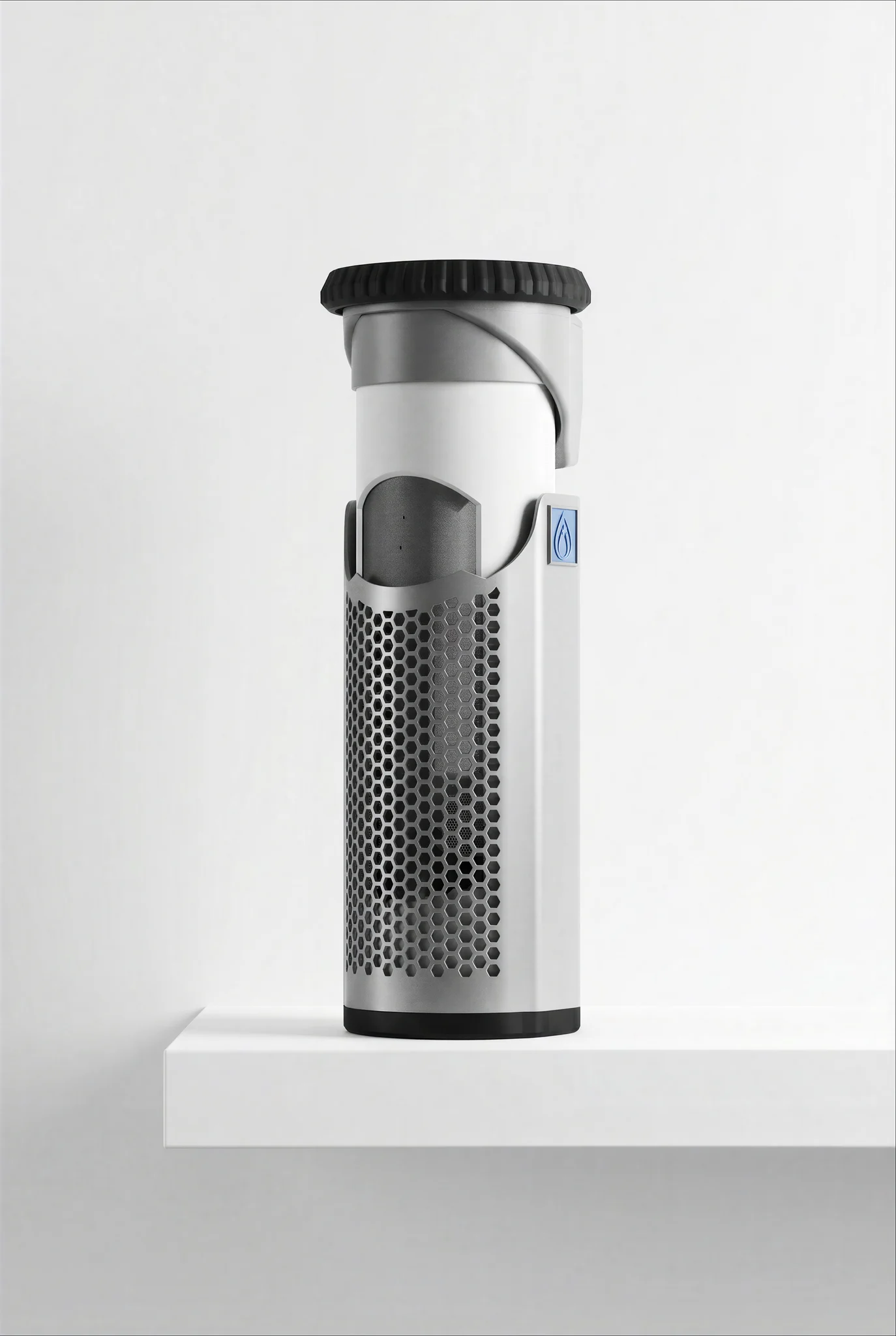
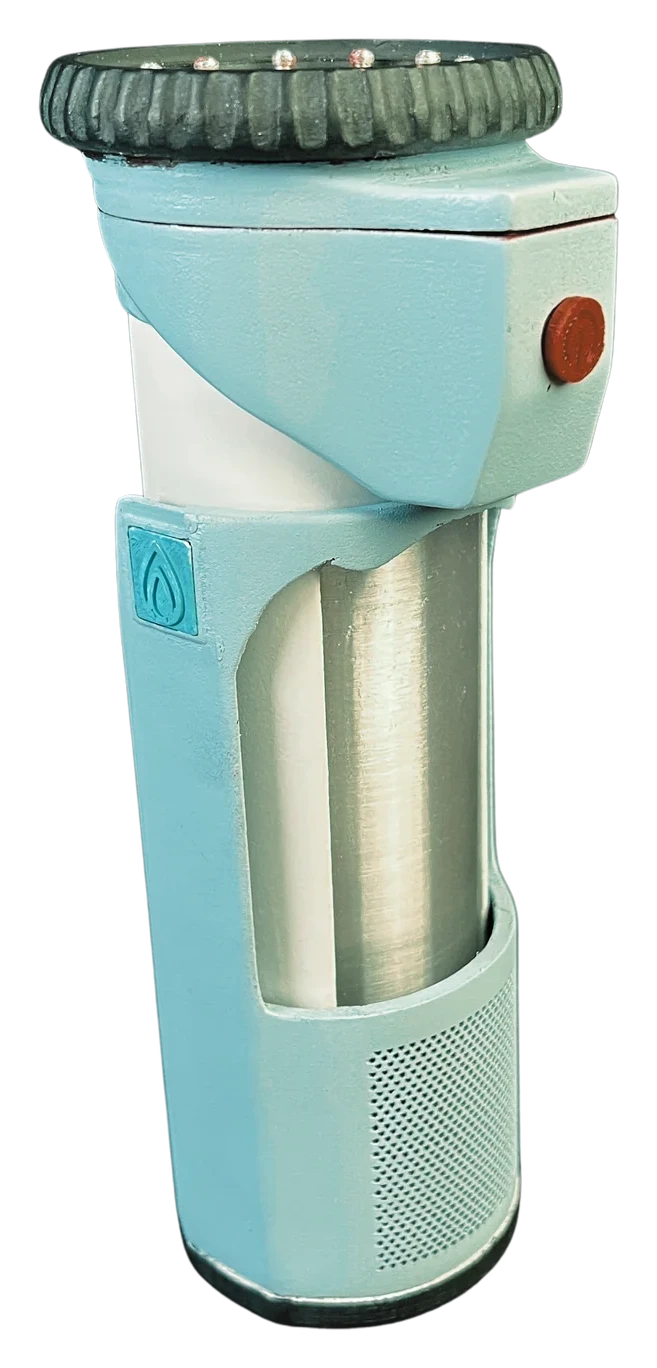
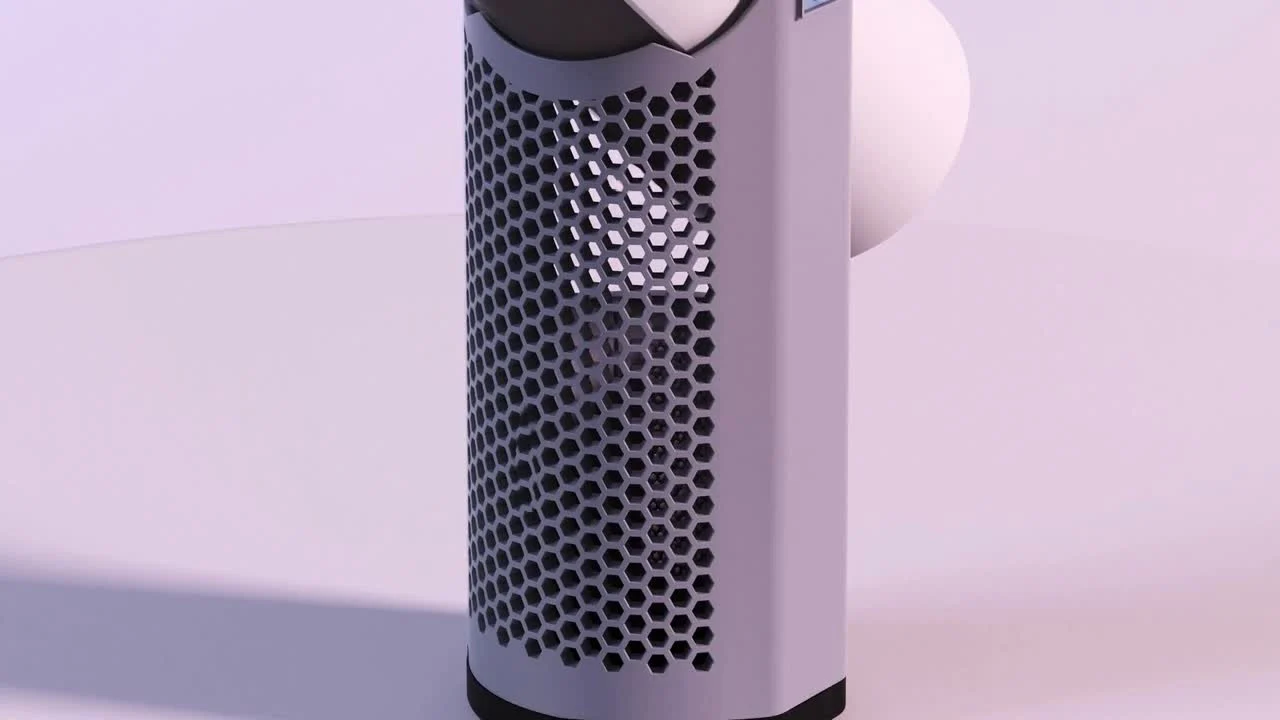
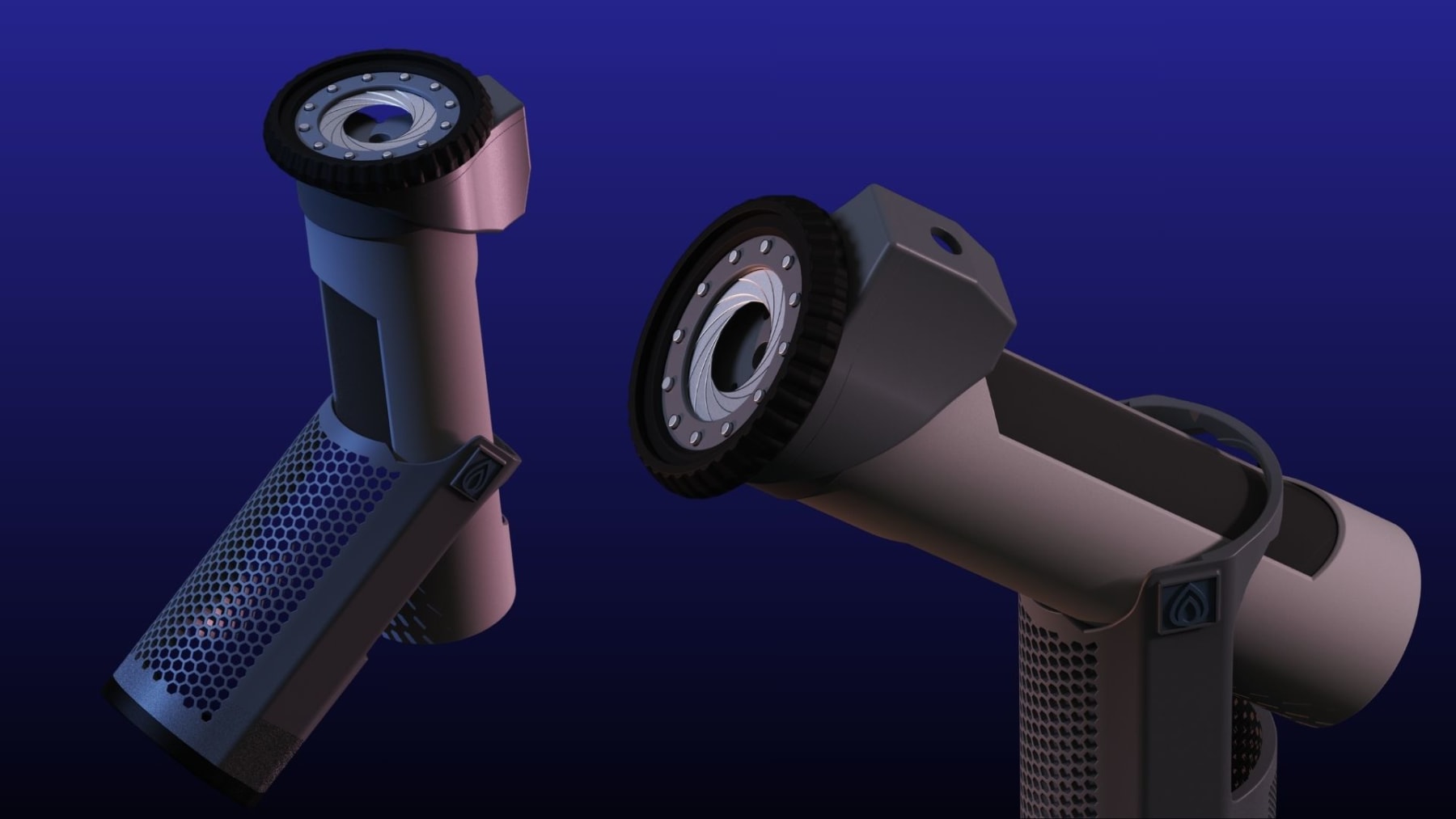
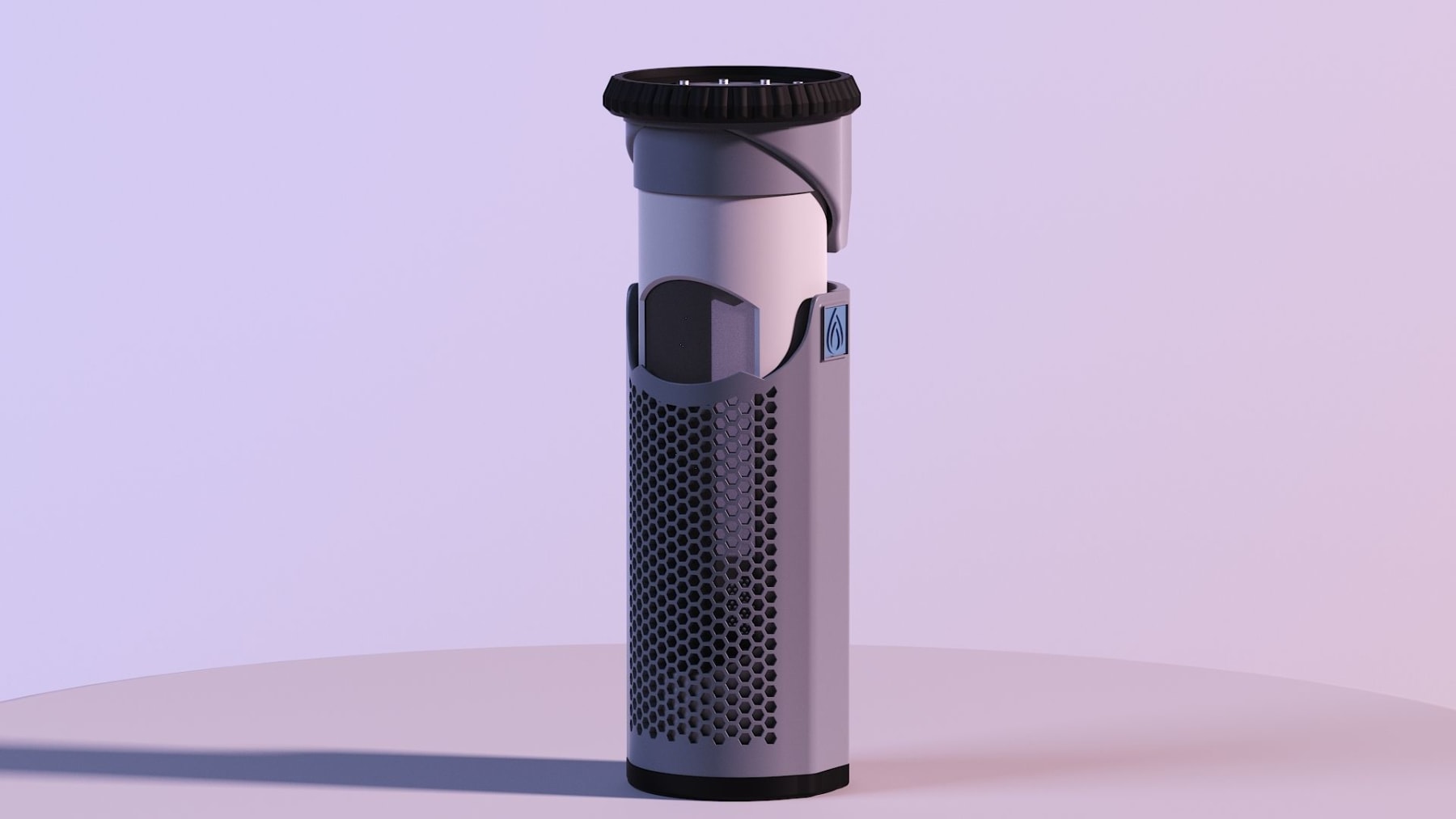
The final direction is a cylindrical desktop atomizer that can stay upright as a humidifier or be handled as a cleaning tool: a slide-and-rotate body, a clear water reservoir, a power and mode button, and an adjustable iris that shapes the mist opening.
One object does both jobs.
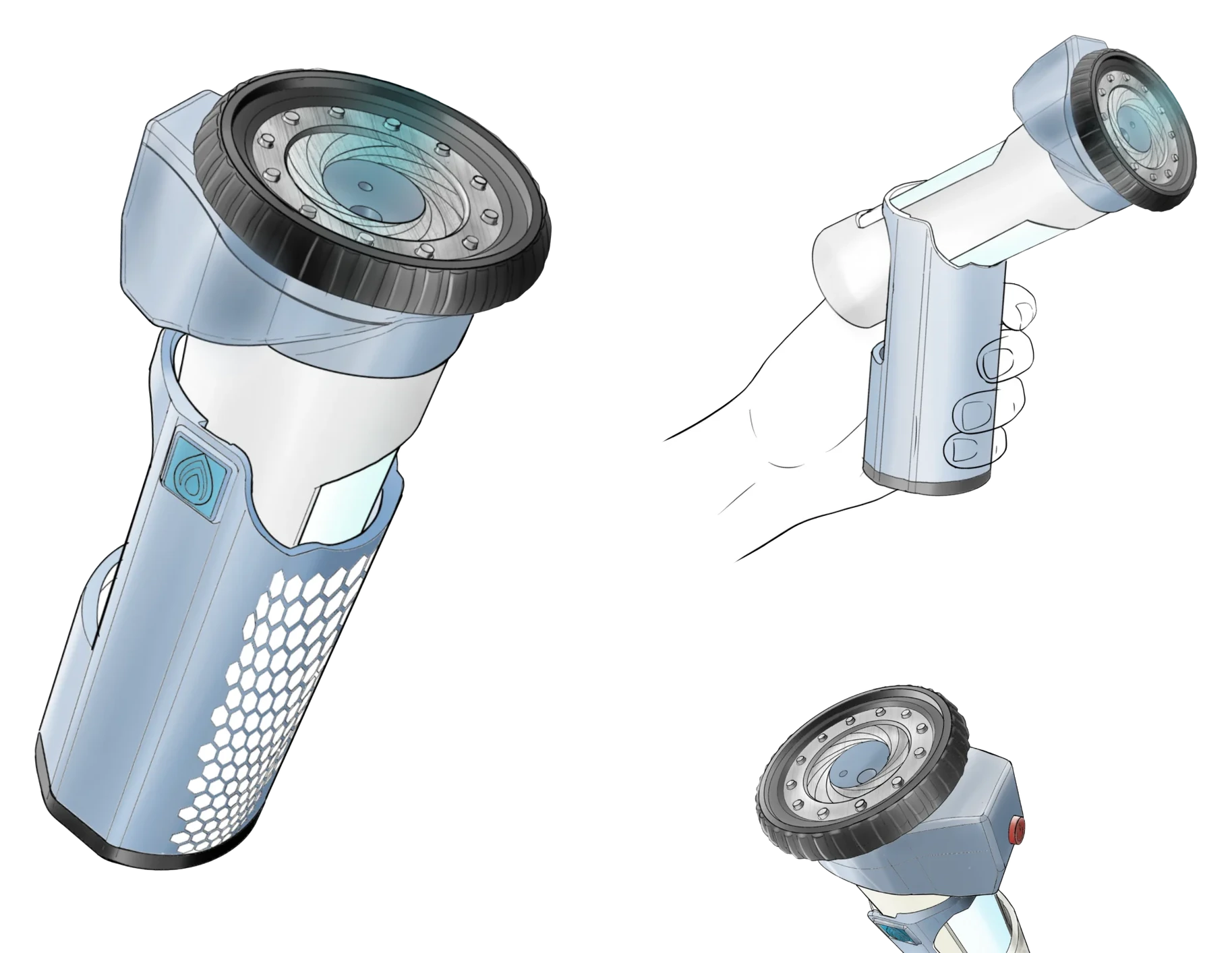
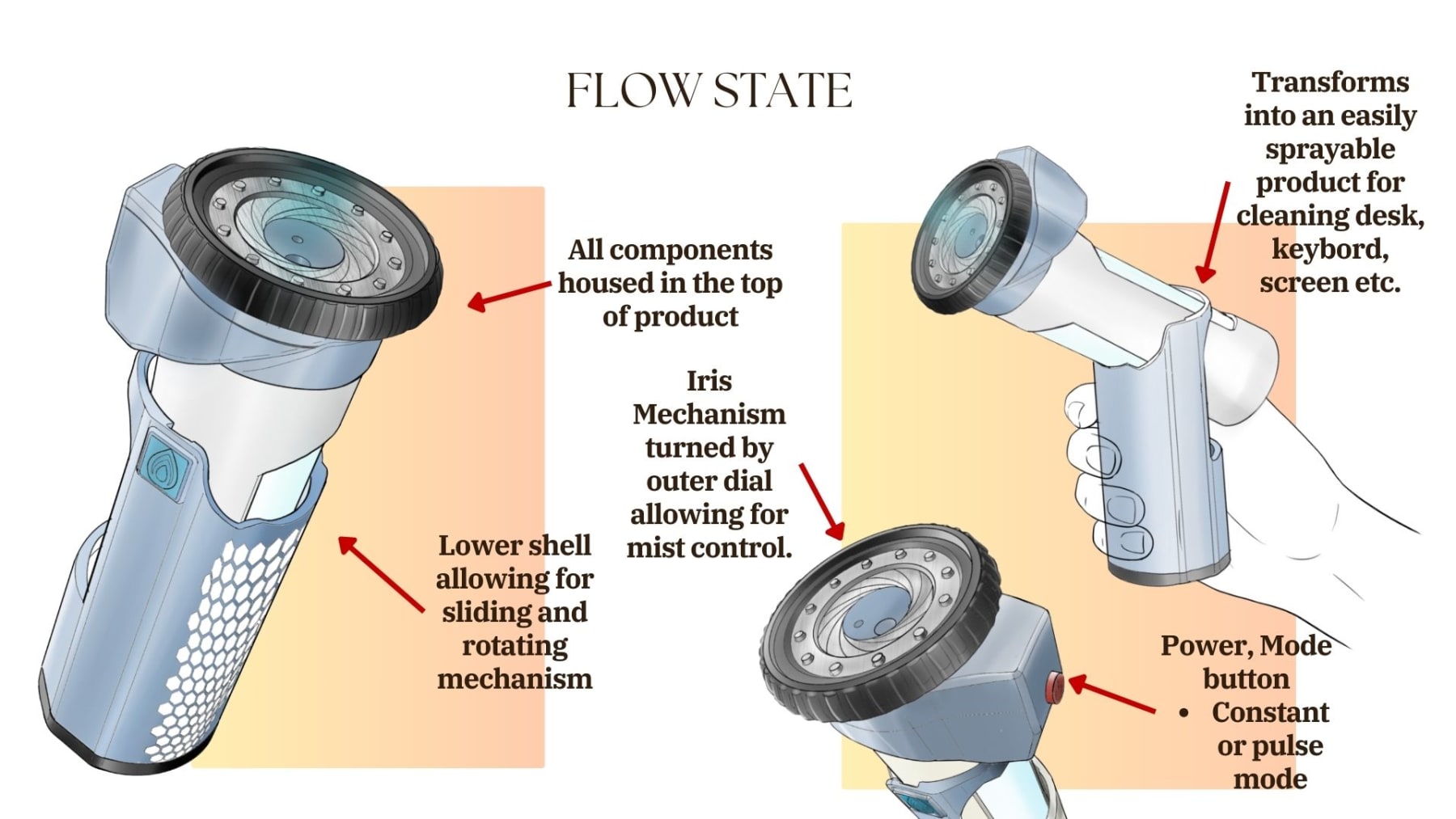
01All components housed in the top of product
02Lower shell allowing for sliding and rotating mechanism
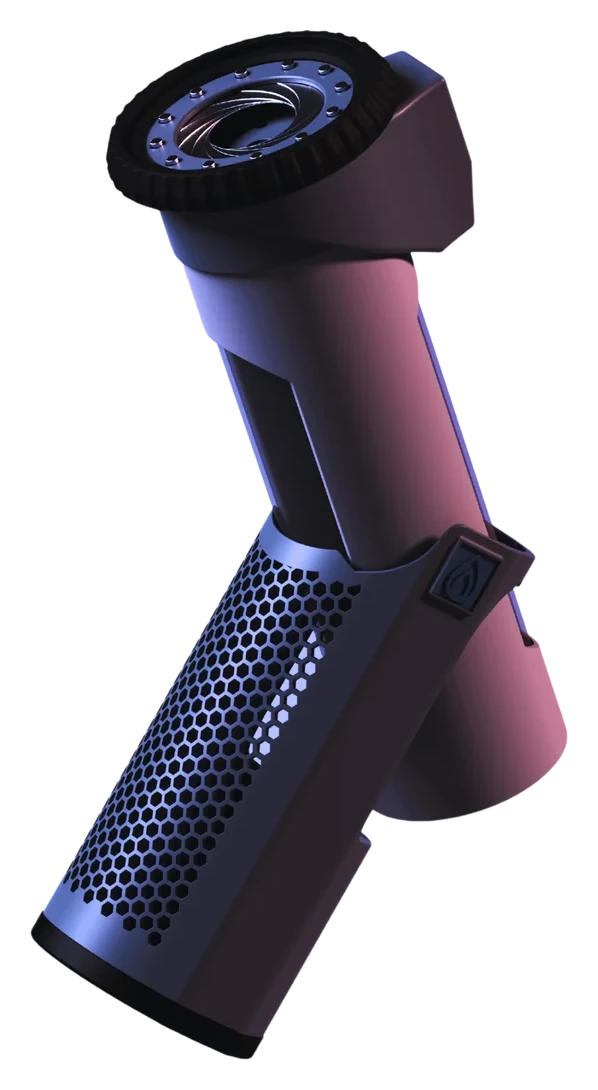
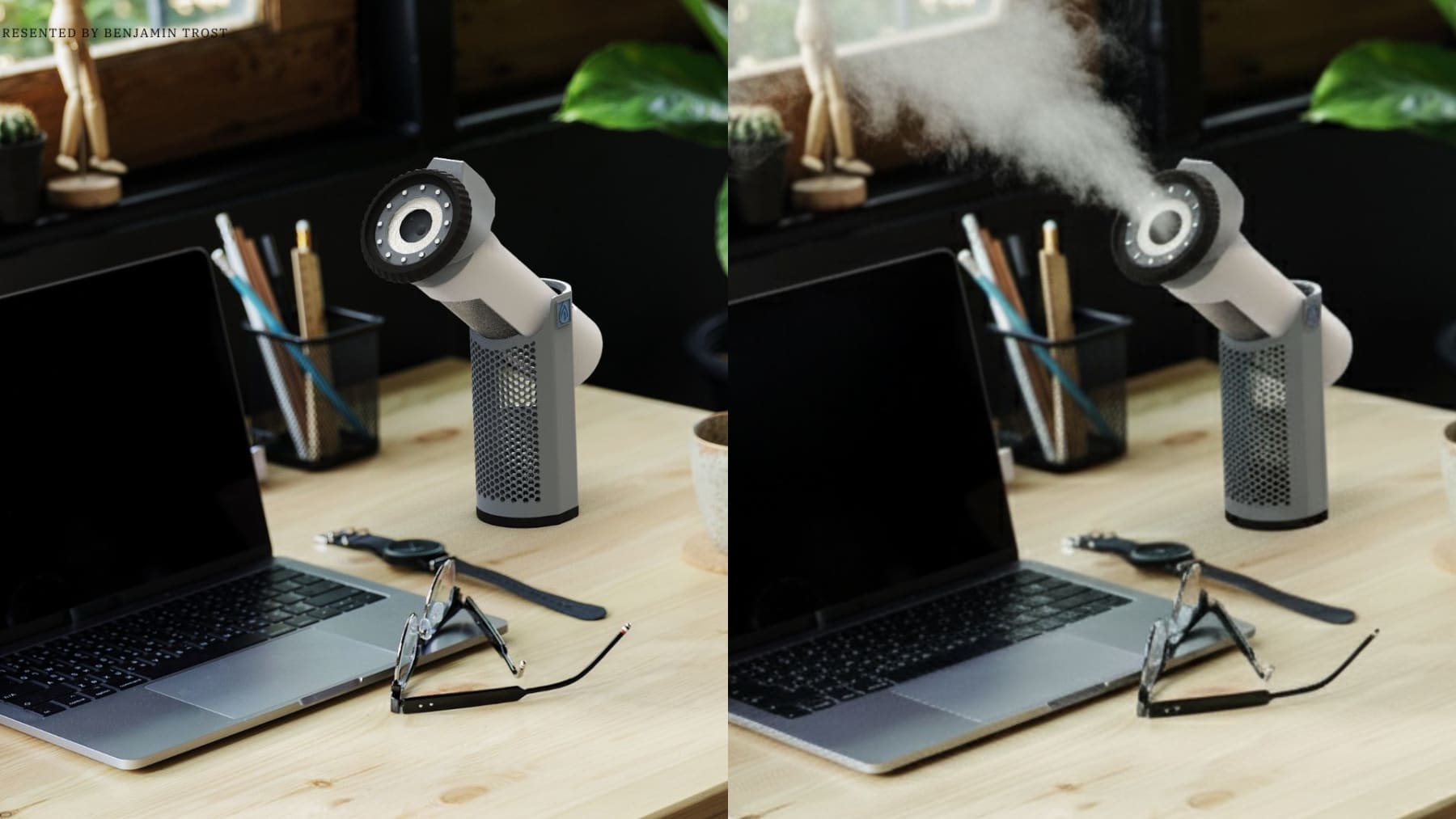
03Transforms into an easily sprayable product for cleaning desk, keyboard, screen, etc.
04Iris mechanism turned by outer dial, allowing for mist control
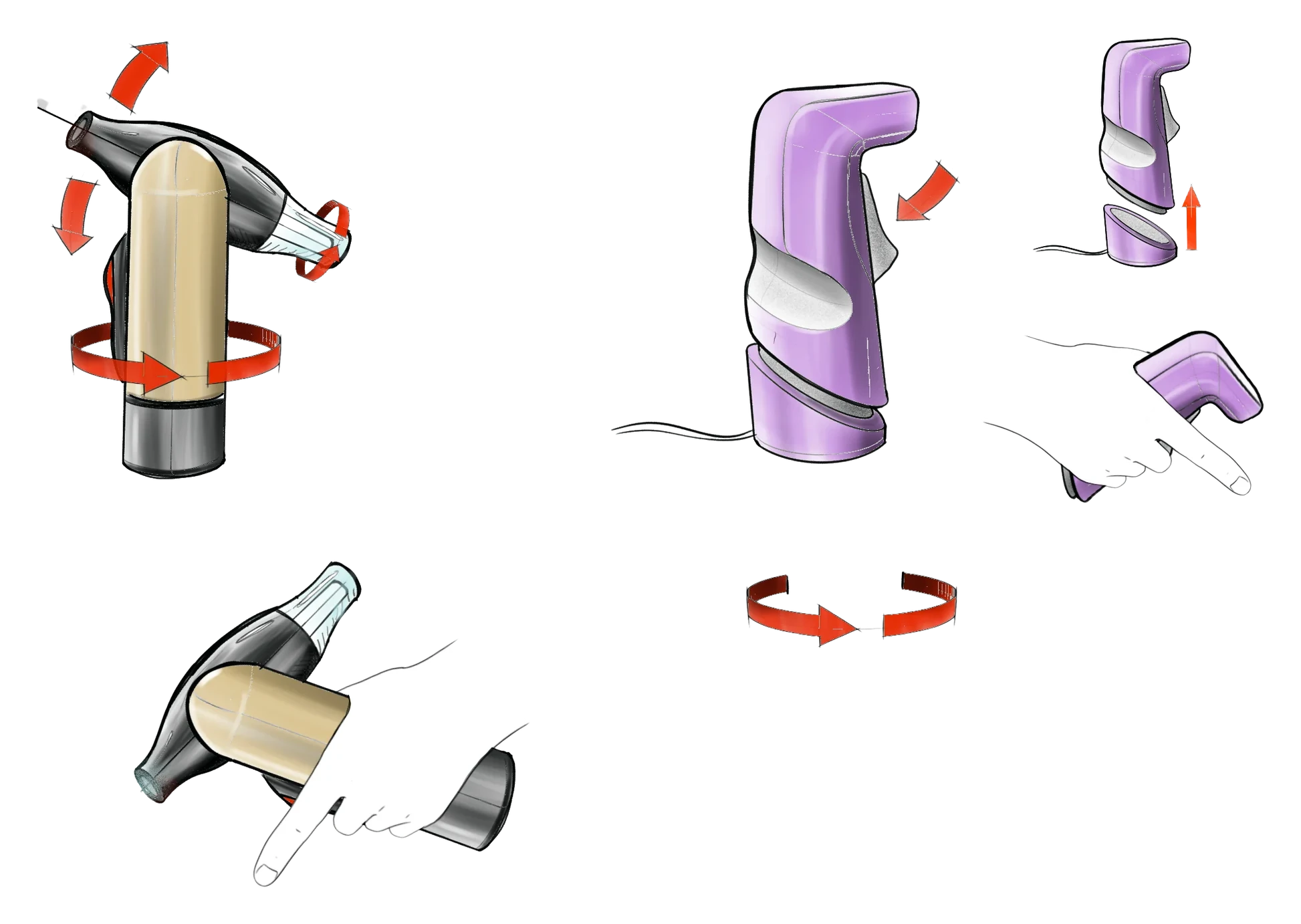
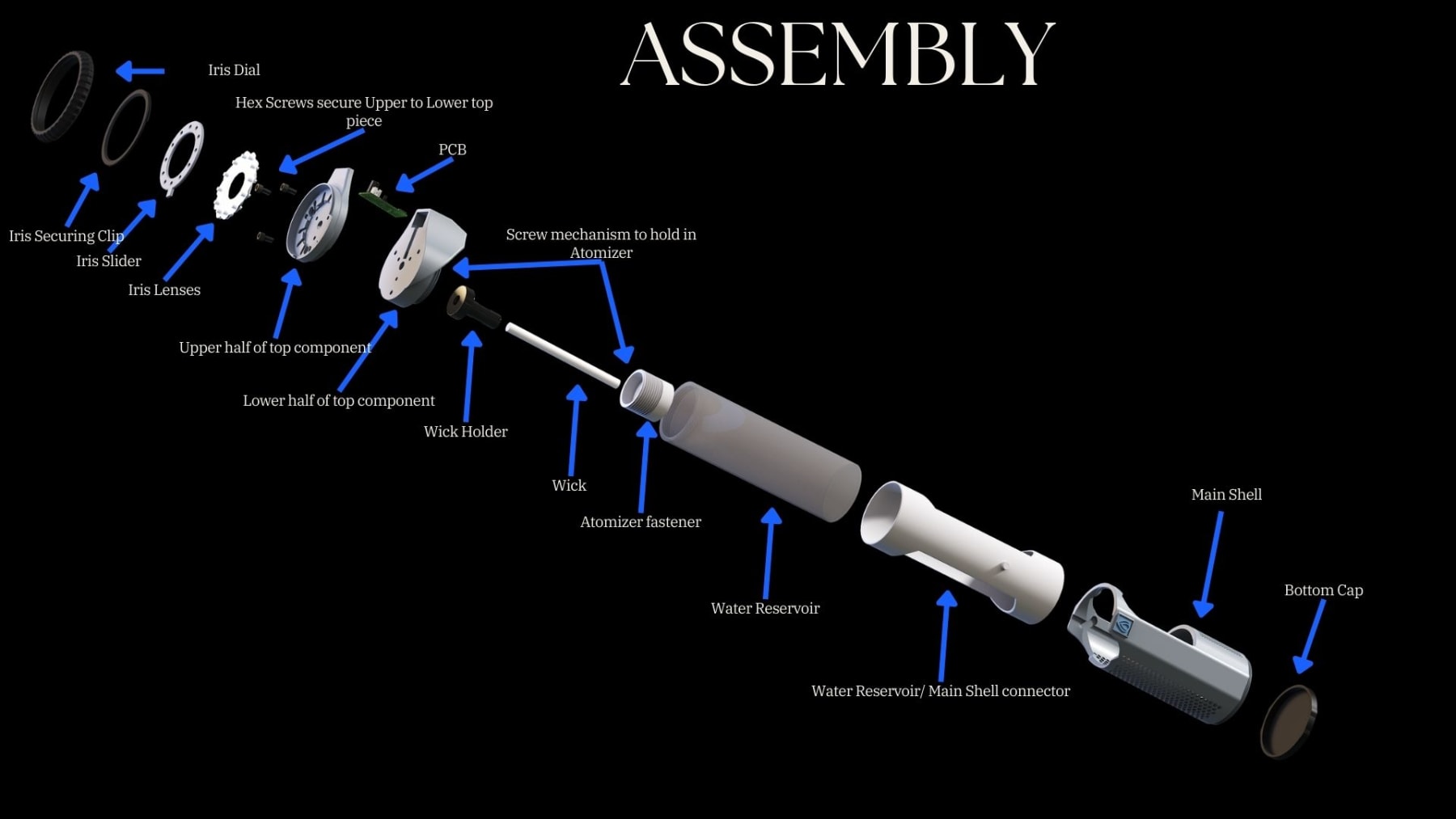
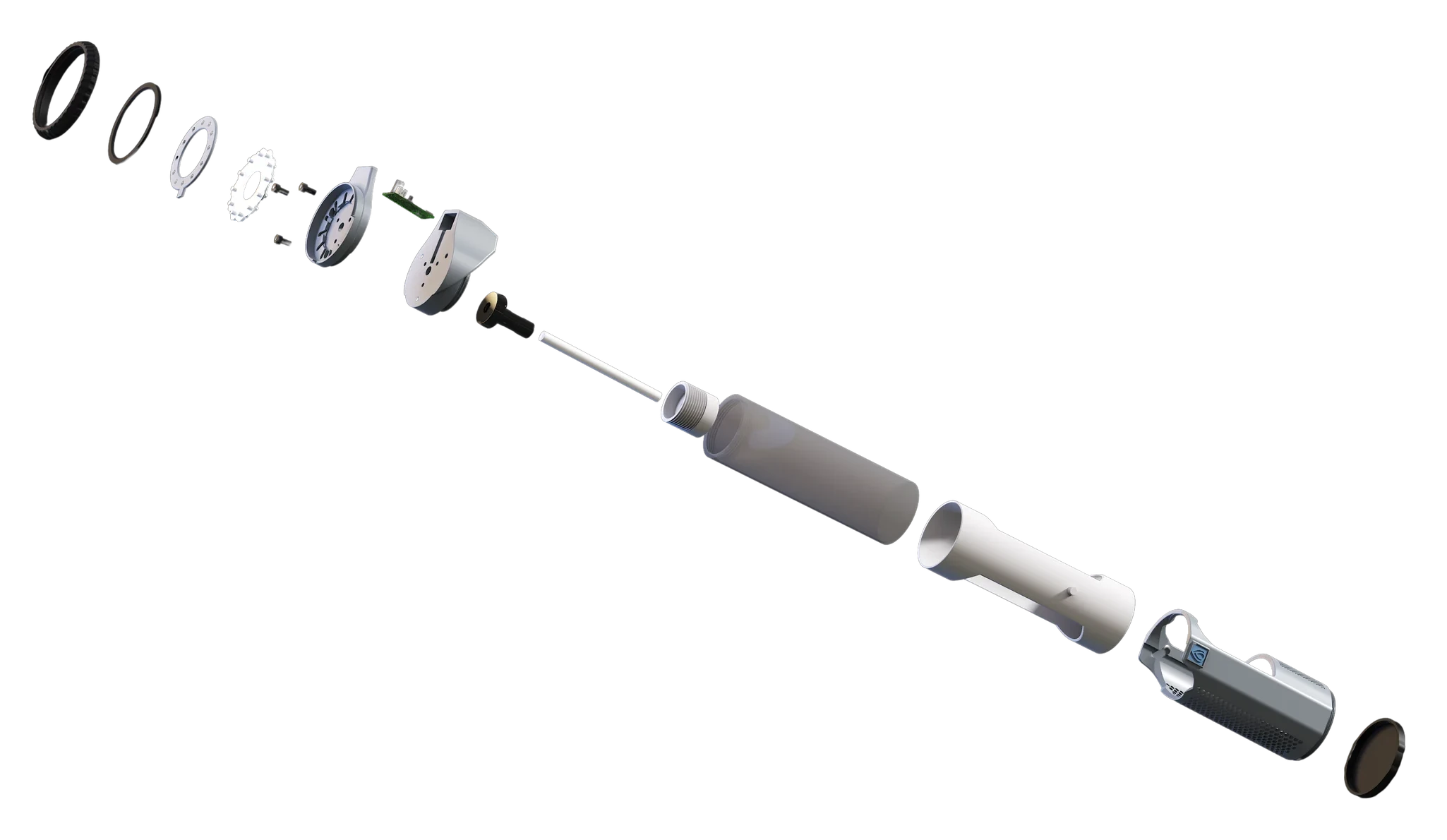
The assembly drawings cover the atomizer, wick, reservoir, iris lenses, slider and dial, motherboard, shell, and fasteners. Parts are held together with screws, threaded connections, and friction fits instead of glue or sealed seams, with ventilation and a reservoir connection designed for assembly and maintenance.
The materials table is a proposed specification, not a manufactured product.
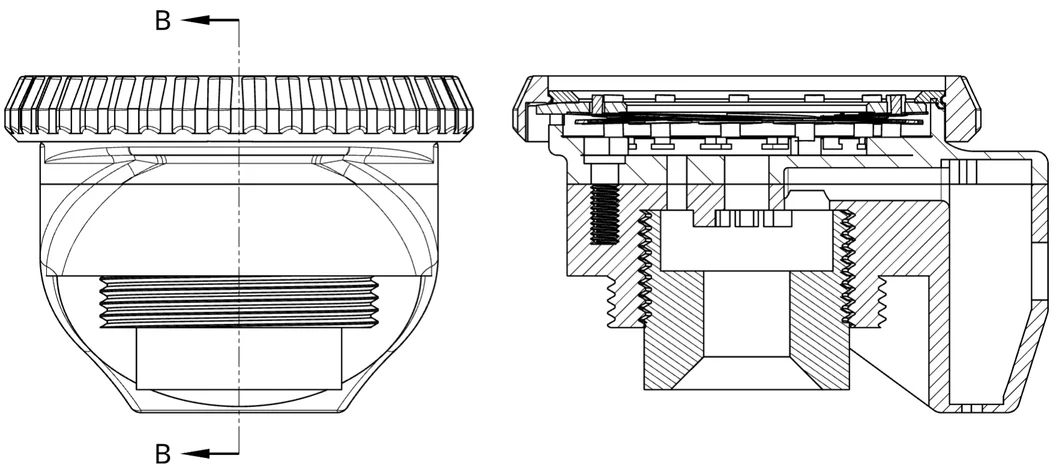
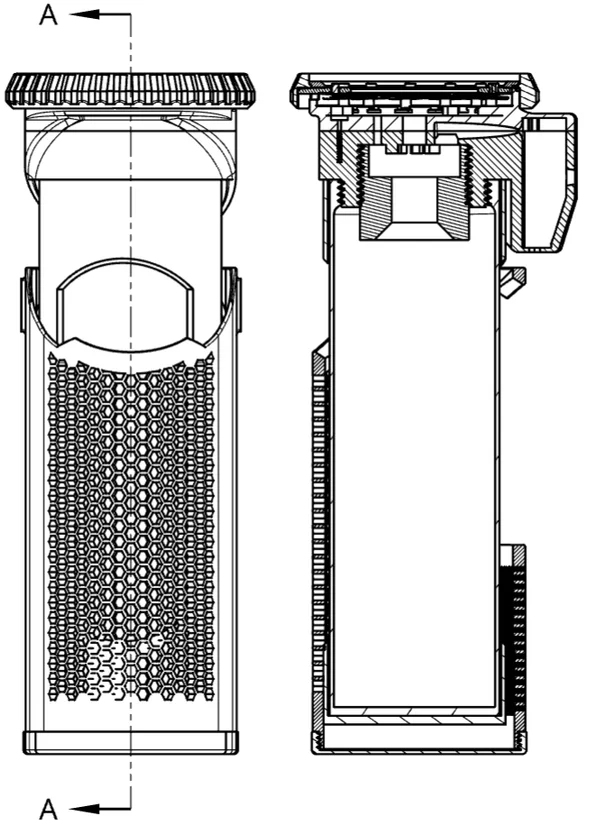
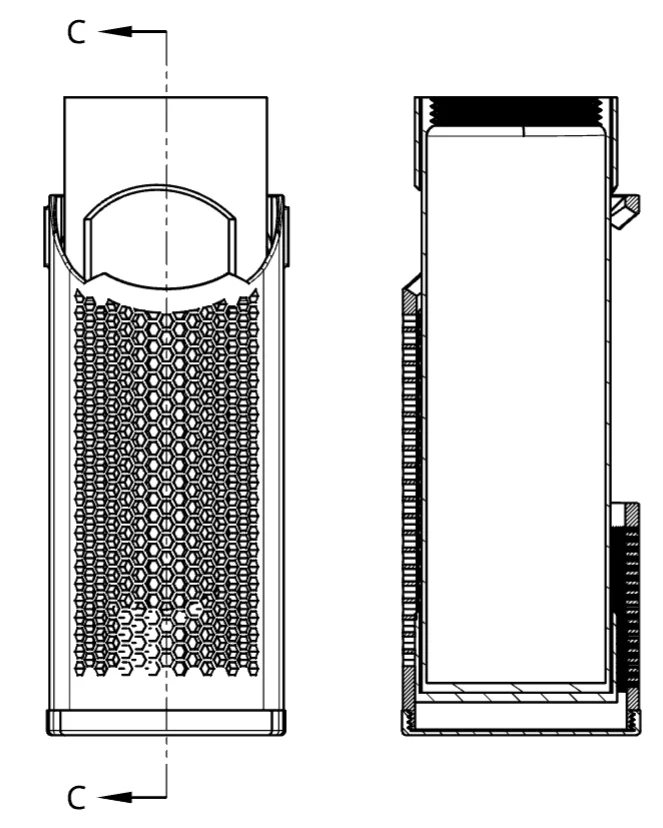
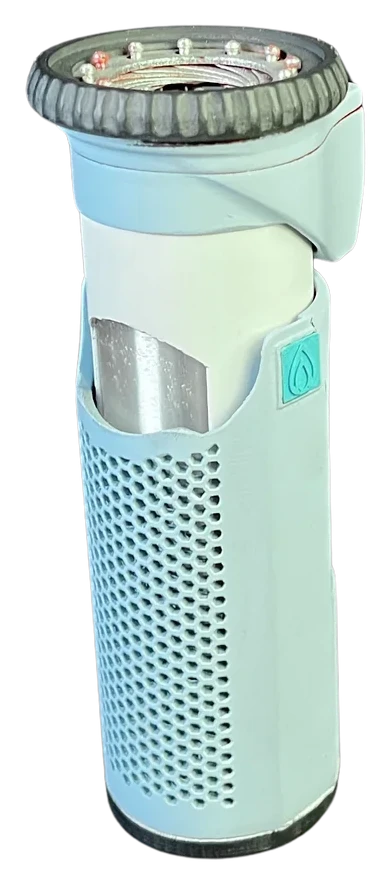
The final prototype has the twist-and-slide mechanism, a visible water level, an adjustable iris, and full or pulse spray modes.
Early models had problems with stability, sealing, and alignment. I adjusted the proportions, added a clear reservoir, and refined the iris. Print finish, rigidity, and tight internal tolerances stayed hard.
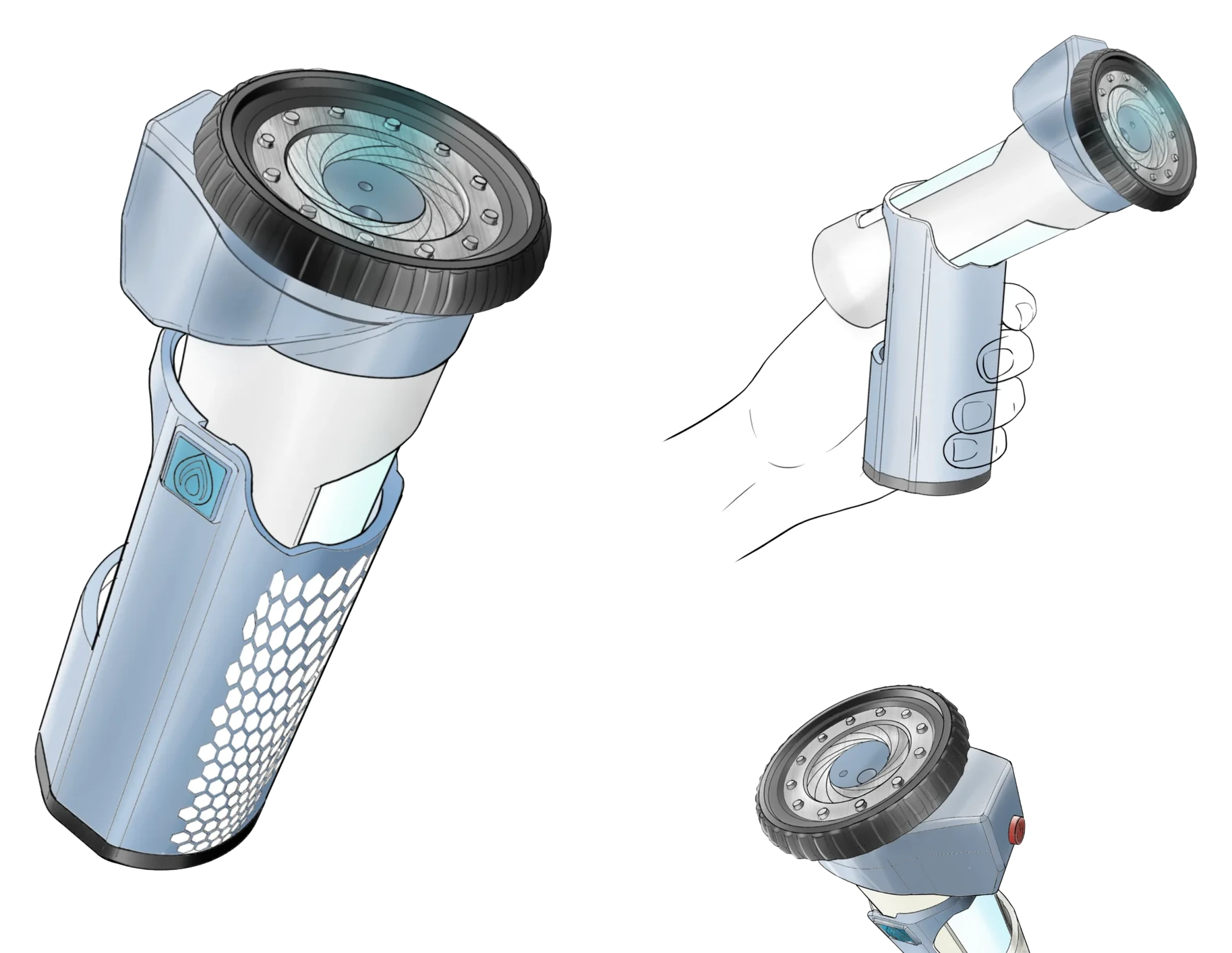
A rendered animation of the slide, twist and spray.